
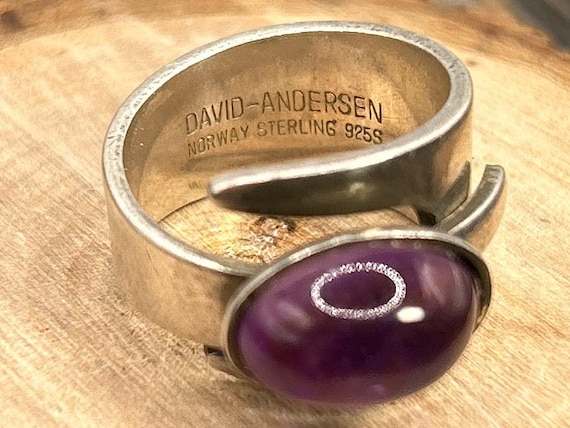
DAVID-ANDERSEN
- Maker
- David-Andersen attributed, not confirmed
- Struck in
- Oslo, Norway attributed, not confirmed
- In use
- from 1925 attributed, not confirmed
- Recorded on
- 2 pieces
This is the maker's and standard purity mark used by David-Andersen, the prominent Norwegian silversmithing firm founded in Christiania (now Oslo) by David Andersen in 1876. The strike consists of the maker's full hyphenated name, the country of origin ("NORWAY"), and a dual silver purity designation combining the English standard word "STERLING" with the Scandinavian numerical fineness mark "925S" (indicating 925 parts pure silver per 1,000).
Pieces carrying this mark span the mid-20th century, representing Norway's influential post-war Modernist and Scandinavian design movements. The firm is widely recognized for both its vitreous guilloché enamel work and its sculptural, cast sterling jewelry produced from the late 1950s through the 1970s by renowned in-house designers such as Marianne Berg, Bjørn Sigurd Østby, Willy Winnaess, and Uni David-Andersen.
This all-caps linear block mark can be distinguished from 19th- and early 20th-century David-Andersen marks, which often featured pictorial symbols like pincers/pliers, script lettering, or lower purity standards such as "830S". It should also be checked for accompanying designer signatures or initials, such as "INV. U.D-A" or "INV. M.B.", which frequently appear alongside this primary workshop strike to credit individual contributing artists.
As struck on the pieces recorded here, the full run of stamps reads “DAVID-ANDERSEN NORWAY STERLING 925S”.
The mark on different pieces
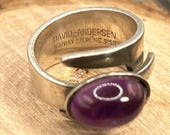
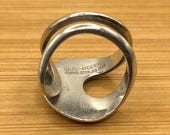
Previously sold with this mark
Kept on the record — a maker's back catalogue is most of the evidence that a mark is what we say it is.
What this entry is based on
- 2 pieces carrying this mark, handled and photographed by this shop Written with the piece in hand. No published hallmark reference covers most of these marks.
Nothing outside this shop has been checked for this mark yet. What is above comes from the pieces themselves and from what was written while they were in hand.
Know something we don't about this mark? Tell us — corrections from collectors are how a reference like this gets better.