
MEXICO
- Struck in
- Mexico attributed, not confirmed
- Recorded on
- 8 pieces
MEXICO is an origin stamp. It says where the piece was made and nothing about who made it or what the metal is — which is why it is nearly always struck beside something else.
Mexican silver is one of the great twentieth-century traditions, centred on Taxco but produced across the country, and the volume is enormous: everything from serious studio work by named silversmiths to tourist-trade pieces turned out by the thousand. The MEXICO stamp alone does not distinguish between them. What distinguishes them is the mark beside it — a maker's name, a workshop's initials, or the eagle assay mark used from the late 1940s into the 1970s.
Common combinations you will see inside a band: "MEXICO 925", "925 MEXICO", "HECHO EN MEXICO" (made in Mexico), and "TAXCO MEXICO". Read them as two or three separate facts struck side by side rather than as one long mark.
If your piece reads only MEXICO with no purity stamp at all, treat the silver content as unverified. A good deal of mid-century Mexican work is sterling or better, and some is not.
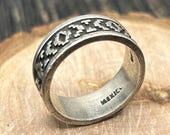
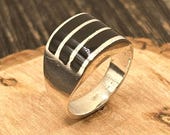
Available now with this mark
Previously sold with this mark
Kept on the record — a maker's back catalogue is most of the evidence that a mark is what we say it is.
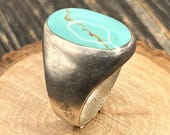 Men's Mexican Silver Turquoise Ring, Size 11.75, Heavy 18g, Modernist BezelSold
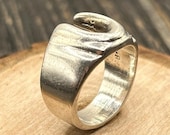 Vintage Taxco Mexico Silver Ring, Chunky Modernist Abstract Design, Signed Sterling Style, Size 8 1/4 Statement JewelrySold
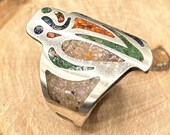 Vintage Mexican Silver Inlay Owl Ring, Size 8 3/4, Jahila Sco, Southwest StyleSold
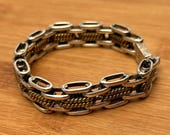
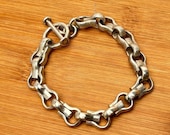 Vintage Heavy Sterling Silver Bracelet, 6 3/4", 49 Grams, Toggle Clasp, Mexico, 925Sold
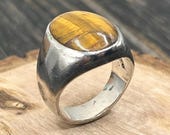 Vintage Taxco Sterling Silver Tiger’s Eye Ring, Size 9, Heavy 16.88gSold
Struck alongside
MEXICO says what a piece is made of, not who made it. These are the marks it is struck beside here.
If your piece also carries a Mexican assay mark, here is how to date it
Mexico ran two systems and which one a piece carries is itself a date. An eagle's head in profile with a number inside it was compulsory from 1948 and discontinued in 1979, so an eagle puts the piece inside that span. The eagle was drawn in outline until about 1955 and as a solid silhouette after, which narrows it further.
From 1979 the eagle was replaced by a letter-letter-number registry mark that is still in use — TL-67, TF-24. The first letter is the town: T for Taxco, M for Mexico City, G for Guadalajara, C for Cuernavaca. The second is the first letter of the silversmith's surname, and the number is their place in that town's register.
The number does not name the maker on its own. Matching a registration to a person takes the register, and collectors have spent decades doing it one entry at a time. Where we cannot say whose it is, this index says so rather than guessing.
| Struck | Means |
|---|---|
| An eagle mark, any number | 1948–1979 |
| TL-67 | After 1979; Taxco, surname beginning L |
What this entry is based on
- 8 pieces carrying this mark, handled and photographed by this shop Written with the piece in hand. No published hallmark reference covers most of these marks.
Nothing outside this shop has been checked for this mark yet. What is above comes from the pieces themselves and from what was written while they were in hand.
Know something we don't about this mark? Tell us — corrections from collectors are how a reference like this gets better.